
Your brakes are, quite literally, what stand between a smooth stop and a serious problem. Yet most drivers don’t think much about them until something feels off, a strange noise, a soft pedal, or that unsettling moment when stopping takes just a bit longer than it should.
At Toy Car Care in Centennial, Colorado, we’ve been specializing exclusively in Toyota, Lexus, and Scion vehicles since 1997. That singular focus means we understand the brake systems on these vehicles better than anyone. We know which Camry model years tend to wear through pads faster, why certain Lexus rotors need specific attention, and what makes Scion braking systems unique. This isn’t general knowledge, it’s the kind of expertise that comes from over 250 years of combined experience working on these three brands alone.
Whether you’re hearing a faint squeal or your brake warning light just flickered on, this guide will walk you through everything you need to know about brake repair and replacement for your Toyota, Lexus, or Scion.
Signs Your Brakes Need Attention
Catching brake issues early can save you money and, more importantly, keep you safe. The good news? Your vehicle usually gives you plenty of warning before things get serious.
Warning Sounds and Sensations
That high-pitched squeal you hear when slowing down isn’t random, it’s actually by design. Most brake pads have built-in wear indicators, small metal tabs that contact the rotor when pads get thin. Think of it as your car’s way of tapping you on the shoulder.
But squealing isn’t the only sound to watch for. Grinding noises are more urgent. That metal-on-metal sound typically means your pads are completely worn and the backing plate is now damaging your rotors. At that point, a simple pad replacement becomes a more expensive rotor resurfacing or replacement job.
Pay attention to what you feel, too. A pulsating brake pedal often indicates warped rotors, common on Toyota trucks and SUVs that do a lot of towing or hauling. If your vehicle pulls to one side when braking, you might be dealing with a sticking caliper or uneven pad wear. And a soft, spongy pedal? That usually points to air in the brake lines or a fluid issue that needs immediate attention.
Visual and Performance Indicators
Some signs don’t make noise at all. If your stopping distance has gradually increased, meaning you need to press the pedal harder or earlier than before, your brake system is telling you something.
Many Toyota, Lexus, and Scion models make visual inspection relatively easy. You can often see your brake pads through the wheel spokes. New pads are typically about 10-12mm thick: once they’re down to 3mm or less, it’s time to schedule service.
Don’t ignore your dashboard either. That brake warning light exists for a reason. On most Toyota and Lexus vehicles, a red brake light indicates a serious issue requiring immediate attention, while an amber ABS light suggests a problem with the anti-lock braking system. Either way, we recommend coming in for diagnostics rather than guessing.
Understanding Brake System Components
Knowing the basics of how your brakes work helps you understand what we’re talking about during service, and why certain repairs cost what they do.
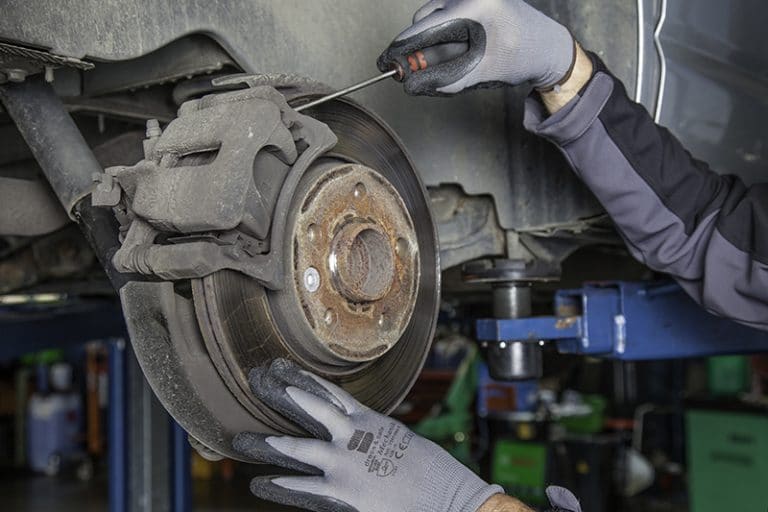
Brake Pads, Rotors, and Calipers
Brake pads are the most frequently replaced component. They’re the friction material that clamps against your rotors to slow the vehicle. Toyota and Lexus use different pad compounds depending on the model, some prioritize quiet operation, others emphasize performance or longevity. We stock original equipment (OE) parts so your replacement pads match what the engineers designed for your specific vehicle.
Rotors are the metal discs the pads squeeze against. Over time, they wear down, develop grooves, or warp from heat. Sometimes we can resurface them to restore a smooth braking surface: other times, replacement makes more sense. We’ll always give you an honest assessment.
Calipers house the pistons that push your pads against the rotors. They don’t fail as often as pads or rotors, but when they do stick or leak, they can cause uneven wear and reduced braking performance. Lexus vehicles, particularly performance-oriented models like the IS and GS lines, sometimes require caliper service sooner due to their more aggressive braking systems.
Brake Fluid and Hydraulic Systems
Brake fluid is the often-forgotten hero of your braking system. When you press the pedal, you’re actually compressing fluid through brake lines to activate the calipers. This hydraulic system needs clean, uncontaminated fluid to work properly.
Here’s something many drivers don’t realize: brake fluid is hygroscopic, meaning it absorbs moisture from the air over time. That moisture lowers the fluid’s boiling point and can cause corrosion inside brake components. Toyota recommends brake fluid replacement every 30,000 miles or so, though we see many vehicles come in having never had this service performed.
Leaks anywhere in the hydraulic system, at the master cylinder, brake lines, or calipers, compromise your stopping power. If you notice your brake fluid reservoir is low or see puddles under your car, that’s something we need to diagnose right away.
Common Brake Services for Toyota, Lexus, and Scion Models
Different vehicles have different needs, and we’ve seen them all. Here’s what we commonly perform on Toyota, Lexus, and Scion vehicles:
Brake pad replacement is the most frequent service. Depending on your driving habits, lots of city driving versus highway cruising, pads can last anywhere from 25,000 to 70,000 miles. Hybrid models like the Prius often see longer pad life thanks to regenerative braking.
Rotor resurfacing or replacement typically accompanies pad changes, especially if you’ve pushed past that squeal into grinding territory. We measure rotor thickness and runout to determine whether machining is an option or if new rotors are needed.
Caliper service includes rebuilding, cleaning, or replacing calipers that stick, leak, or fail to retract properly. This is more common on older Toyotas or vehicles driven in harsh conditions.
Brake fluid flush removes old, contaminated fluid and replaces it with fresh fluid meeting Toyota’s specifications. It’s a relatively inexpensive service that protects expensive components.
Brake line inspection and replacement addresses rust or damage, particularly important in Colorado where road salt and moisture can corrode metal lines over time.
ABS diagnostics and repair uses our computerized diagnostic equipment to identify issues with anti-lock braking systems. These can range from sensor problems to module failures.
We also see plenty of parking brake adjustments, brake hardware replacement, and emergency brake cable service, the less glamorous work that keeps everything functioning smoothly.
When to Choose Repair vs. Full Replacement
One of the most common questions we get is: “Can you just fix it, or do I need new parts?” The honest answer depends on several factors.
Repair makes sense when:
- Rotors have sufficient thickness remaining and only minor surface imperfections
- Calipers are functioning but need cleaning or minor rebuilding
- Brake lines show surface rust but no structural compromise
- The issue is isolated to one component rather than system-wide
Replacement is the better choice when:
- Rotors are below minimum thickness specifications
- Pads are worn to the backing plate
- Calipers are leaking, cracked, or severely corroded
- Brake lines show pitting, bulging, or significant corrosion
- The cost of repair approaches or exceeds the cost of new parts
We always explain your options clearly and let you make the final call. Our ASE Master Technicians will walk you through what we’re seeing, show you the parts when possible, and give you a common-sense recommendation. We don’t upsell unnecessary work, that’s just not how we operate at Toy Car Care.
One thing we won’t compromise on: safety. If a component is genuinely unsafe, we’ll tell you directly. Your brakes are too important for shortcuts.
Benefits of Brand-Specific Brake Expertise
Here’s the thing about Toyota, Lexus, and Scion brake systems, they have quirks that only specialists really understand.
Toyota designs their vehicles for reliability and longevity. Their brake systems reflect that philosophy with robust components that, when properly maintained, deliver years of dependable service. But specific models have known characteristics. The Tacoma’s rear drum brakes, for example, require different attention than the Camry’s four-wheel disc setup. Tundra owners who tow frequently need more aggressive rotor maintenance schedules.
Lexus takes brake engineering further, particularly on performance models. The IS F, RC F, and LC models use high-performance Brembo systems that demand specific pads and careful bedding procedures. Even standard Lexus models have tighter tolerances and quieter operation expectations than typical vehicles.
Scion, while discontinued as a brand, still has plenty of vehicles on the road. The FR-S (now Toyota 86) has a sport-tuned braking system that benefits from our performance expertise, while the xB and xD have more conventional setups.
Because we work exclusively on these three brands, and have since 1997, we’ve built institutional knowledge that general repair shops simply don’t have. We know which parts fail prematurely, which aftermarket options hold up, and which factory service bulletins apply to your specific model year.
That specialization translates to faster diagnostics, accurate repairs, and typically lower costs. We’re not learning on your vehicle: we’ve already seen whatever issue you’re experiencing hundreds of times before.
Maintaining Your Brakes Between Services
While brake components do wear out, that’s their job, after all, how you drive significantly impacts how long they last.
Adjust your driving habits. Hard, late braking generates more heat and wears pads faster. Anticipating stops and braking gradually extends component life considerably. This is especially true in Colorado’s mountain driving, where extended downhill braking can overheat systems quickly.
Use engine braking on descents. Downshifting or using your vehicle’s available tow/haul mode on long downhill stretches reduces reliance on your brakes and prevents heat buildup. Your Highlander or 4Runner will thank you.
Don’t ignore small changes. That slight squeak or subtle vibration won’t fix itself. Addressing minor issues early prevents them from becoming major, and expensive, problems.
Keep up with fluid maintenance. Brake fluid flush intervals matter. Fresh fluid protects internal components and maintains consistent pedal feel.
Watch your tire pressure. Under-inflated tires increase stopping distances and can cause uneven brake wear. It’s an indirect factor, but it matters.
Schedule regular inspections. We inspect brakes during routine maintenance services, but if it’s been a while since your last visit, a quick check can catch issues before they become urgent. Same-day service is available in most cases, so it doesn’t have to disrupt your schedule.
Conclusion
Your Toyota, Lexus, or Scion deserves brake service from technicians who truly understand these vehicles. At Toy Car Care, we’ve dedicated nearly three decades to mastering these brands, and our ASE Master Technicians bring over 250 years of combined experience to every repair.
We believe in transparent pricing, honest recommendations, and work that’s done right the first time. Every brake service comes with our 12-month/12,000-mile warranty, and we honor all extended warranties. Whether you need a simple pad replacement or complex ABS diagnostics, we have the expertise and equipment to handle it.
If you’re noticing any warning signs, or it’s just been a while since your brakes were inspected, give us a call or stop by our Centennial shop. We’ll walk you through everything, answer your questions, and get you back on the road with confidence. That’s the Toy Car Care commitment.